
An annual Northern Ontario harvest tradition
Real people. Northern-grown apples. Fresh cider—and a community making sure good fruit never goes to waste.
More than a festival
Apple Fest brings orchard, neighbourhood and press together for one gloriously sticky celebration.
We taste cold-hardy varieties grown for Northern Ontario, watch apples become cider, talk fruit trees and share the harvest. Some fruit comes from Beautiful Field Farm. Much of it arrives from overloaded backyard trees across Greater Sudbury—fruit that might otherwise fall and disappear.
The result is part tasting room, part working cider day and part community experiment: what can happen when a city stops seeing backyard apples as waste?
Greater Sudbury Apple Rescue
A backyard tree has more full-size apples than one household can reasonably pick or use.
Send us the location, a photograph and an idea of how much fruit is available. Large harvests may qualify for collection.
With the owner's permission, we can arrange a time to assess and harvest suitable trees before the apples fall.
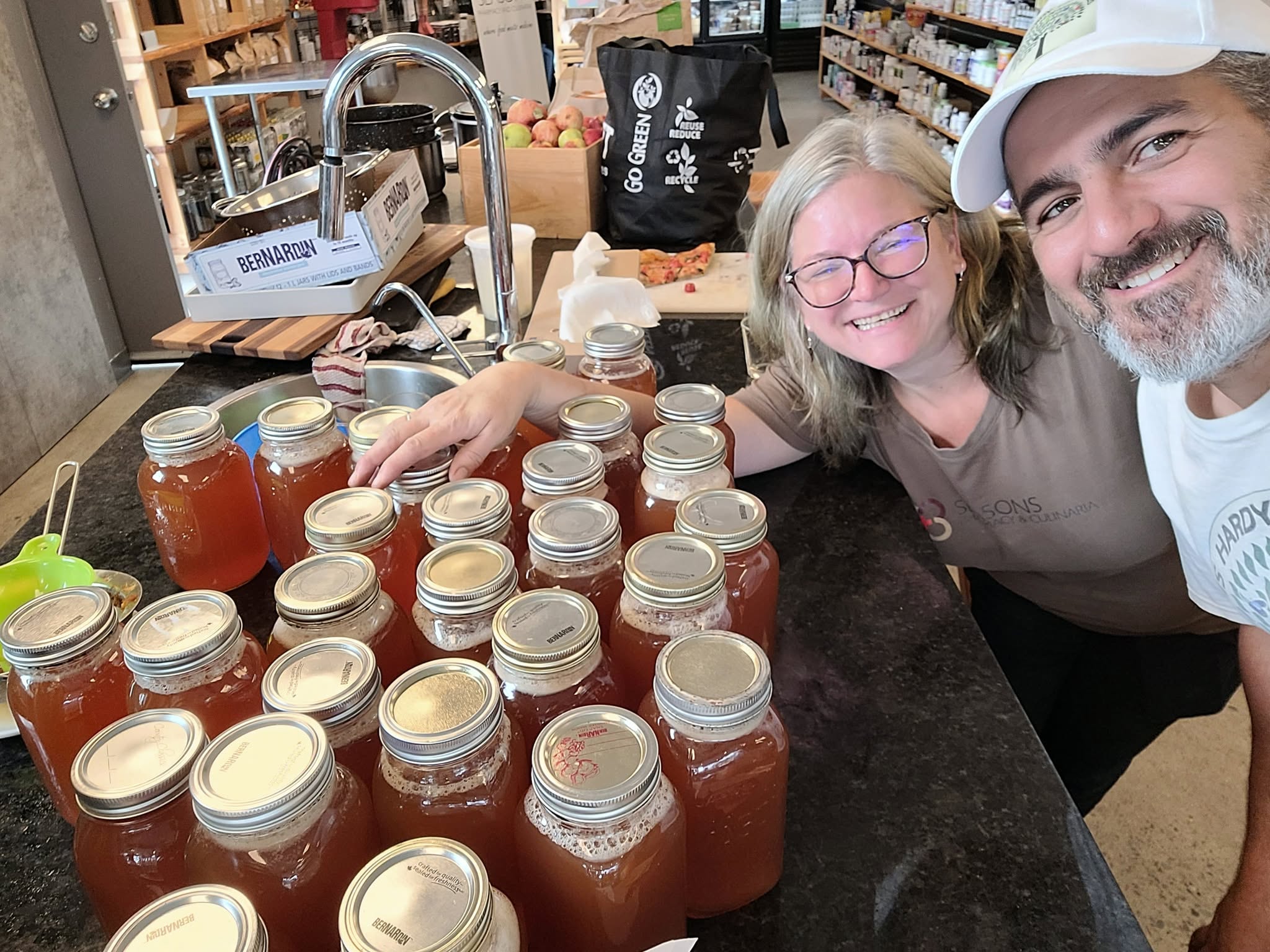
Usable fruit is sorted, cleaned and blended before becoming locally pressed cider.
The rescued fruit returns to the community through Apple Fest, local cider and the Glasshouse Market.
Have a tree? Let us help.
Across Greater Sudbury, perfectly useful apples grow in backyards where the owners may not have the time, tools or appetite to pick them all. We want to give that fruit a good home.
If your tree is overloaded, contact Beautiful Field Farm. We can talk about the fruit, timing and access, then arrange to look at larger harvests. With the owner's permission, suitable trees may be picked by our team and the apples carried away for sorting, tasting and cider.
You do not need to know the variety. The apples do not need to look like grocery-store fruit. Tart apples are especially valuable in a cider blend, and small cosmetic marks are often harmless. What matters is that the fruit is mature, reasonably sound and suitable for human food.
Tell us about your tree ↗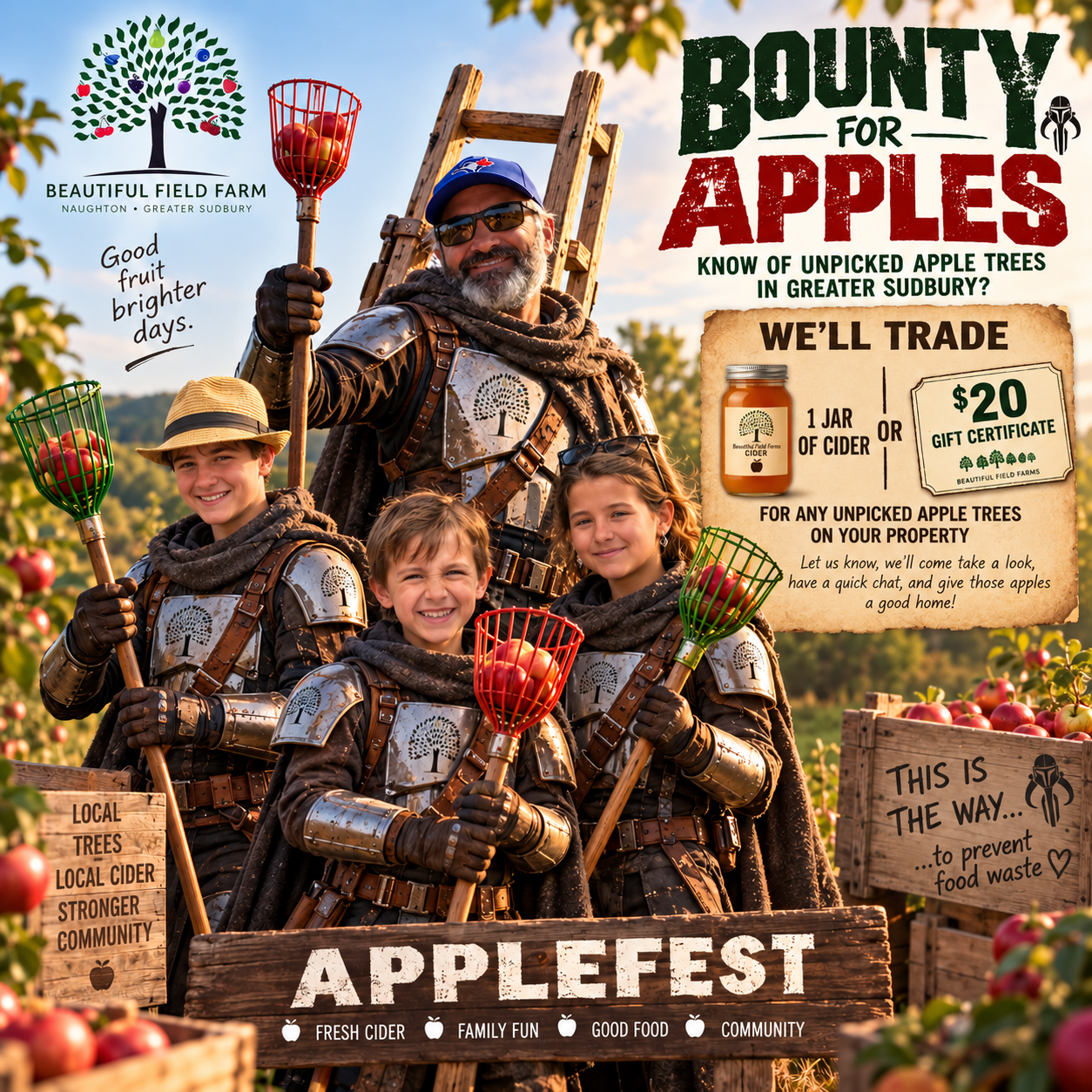
Small trees. Bigger impact.
One rescued tree will not save the planet. But wasting less of what we already grow is one of the most practical places to start.
A mature backyard tree has already used land, rain, sunlight and years of care to produce its crop. Harvesting it respects those resources.
Good apples become fresh fruit or cider instead of being bagged, hauled away or left as an unwanted mess.
Rescued Sudbury apples travel across town—not across the continent—and contribute to a genuinely local seasonal food supply.
Sorting scraps and press pomace can be composted, cycling nutrients back into the farm instead of treating the entire harvest as garbage.
The climate value of any one harvest is modest. The community value is immediate: less waste, more local food and a reason to notice the abundance already growing around us.
The Backyard Apple Bounty
Ugly? Fine. Tart? Great. Weird mystery apple? Absolutely.
Firm, usable, full-size apples—even if they are tart, lumpy, discoloured, lightly bruised, windfallen or not especially good for eating fresh.
Rotten, mouldy or decomposing fruit, apples with substantial insect or animal damage, and crabapples for the bounty program.
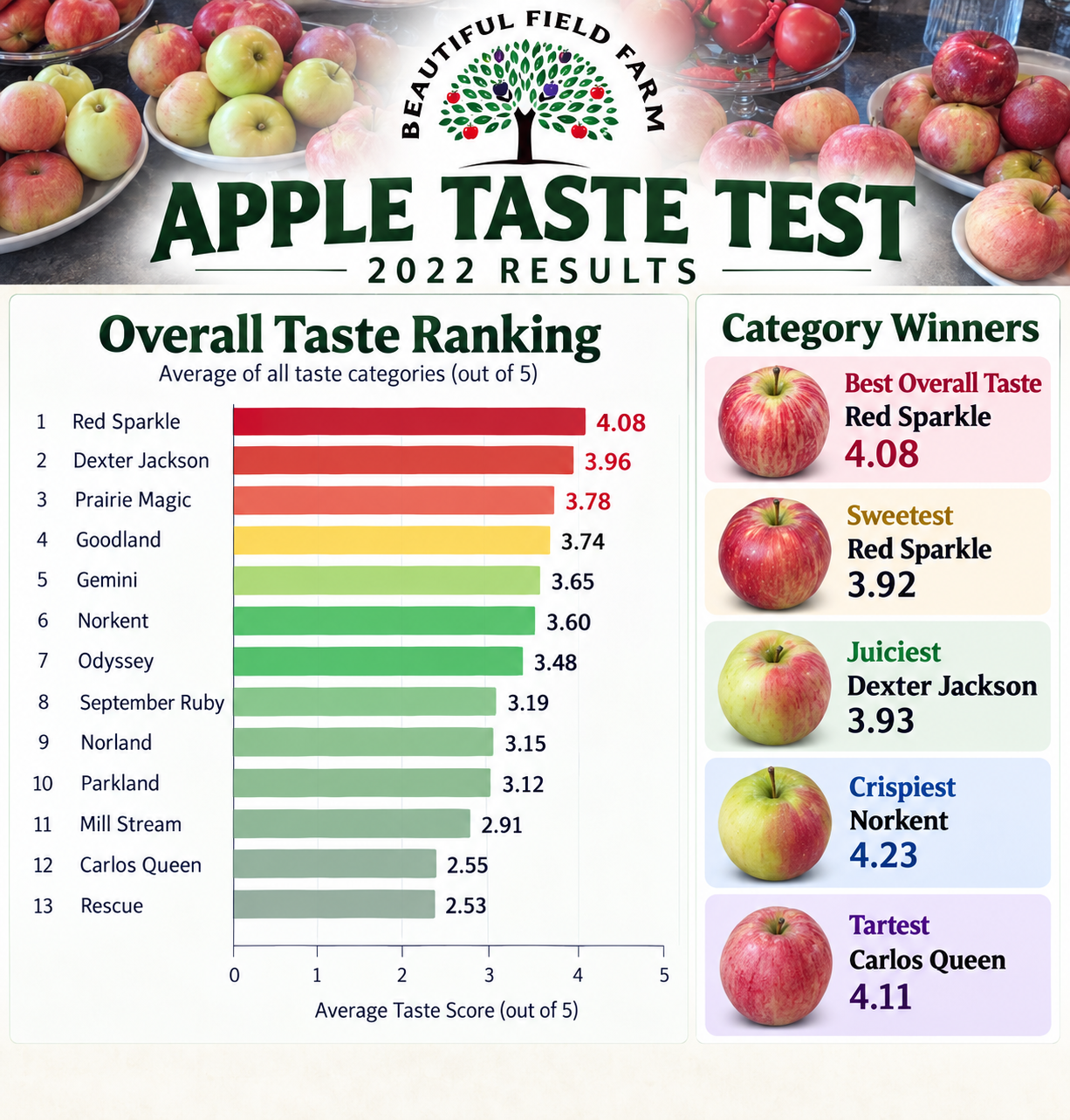
Five years of tasting
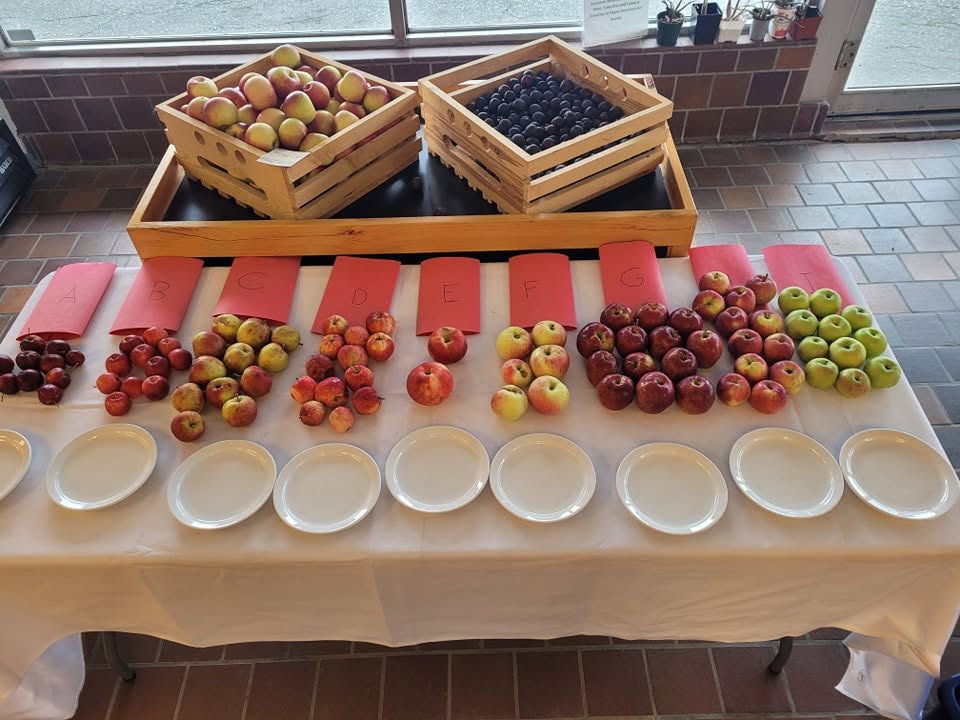
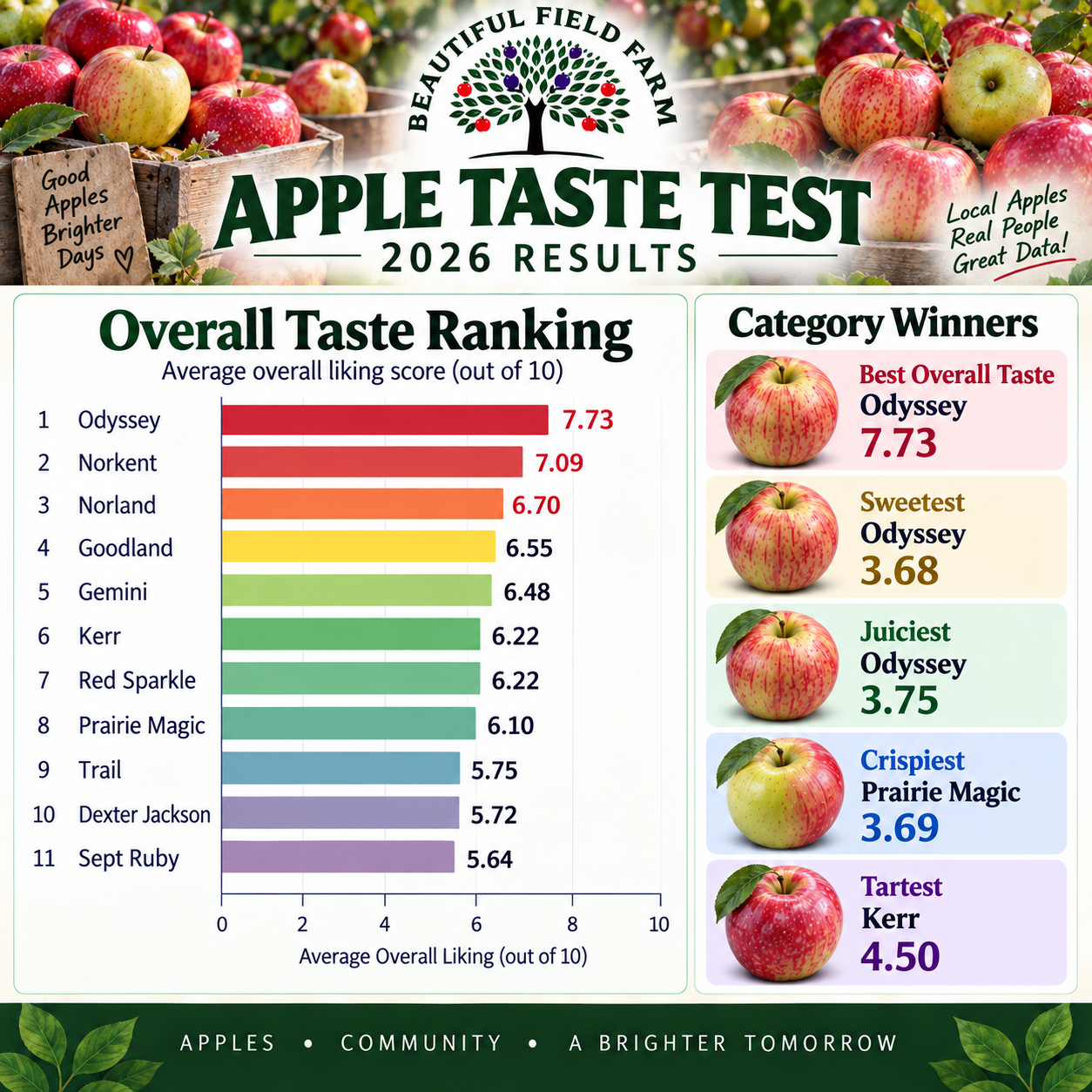
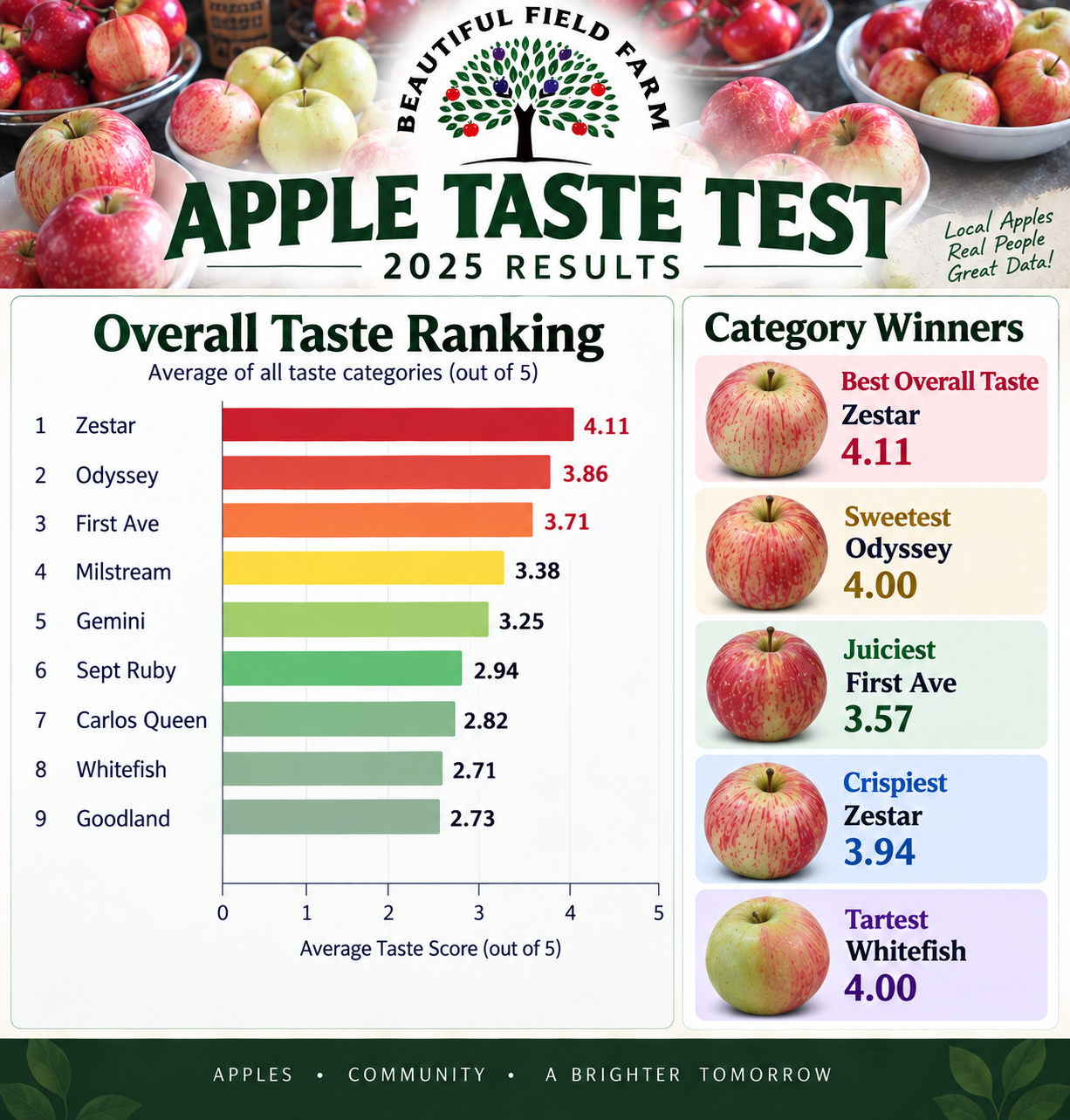
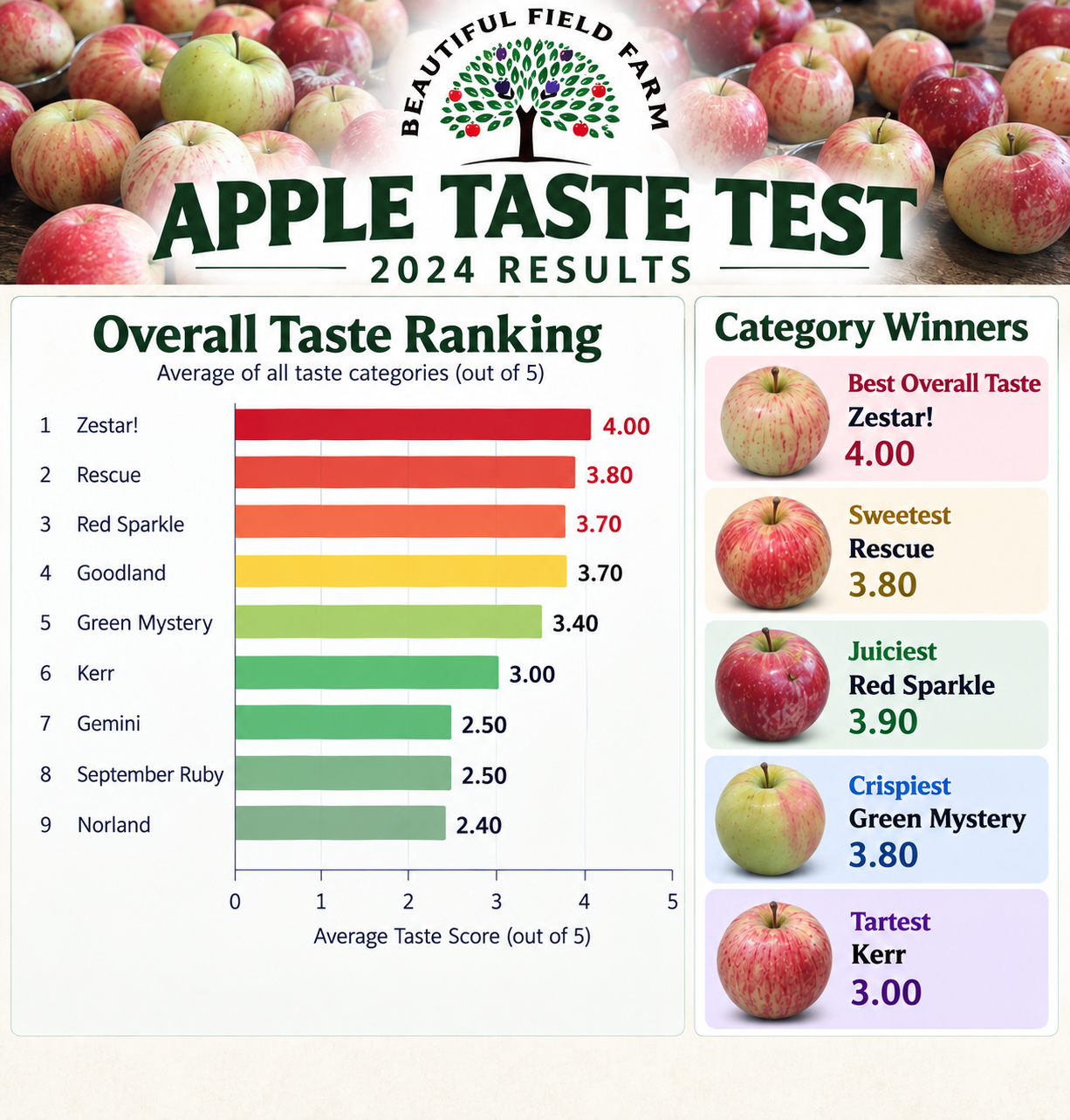
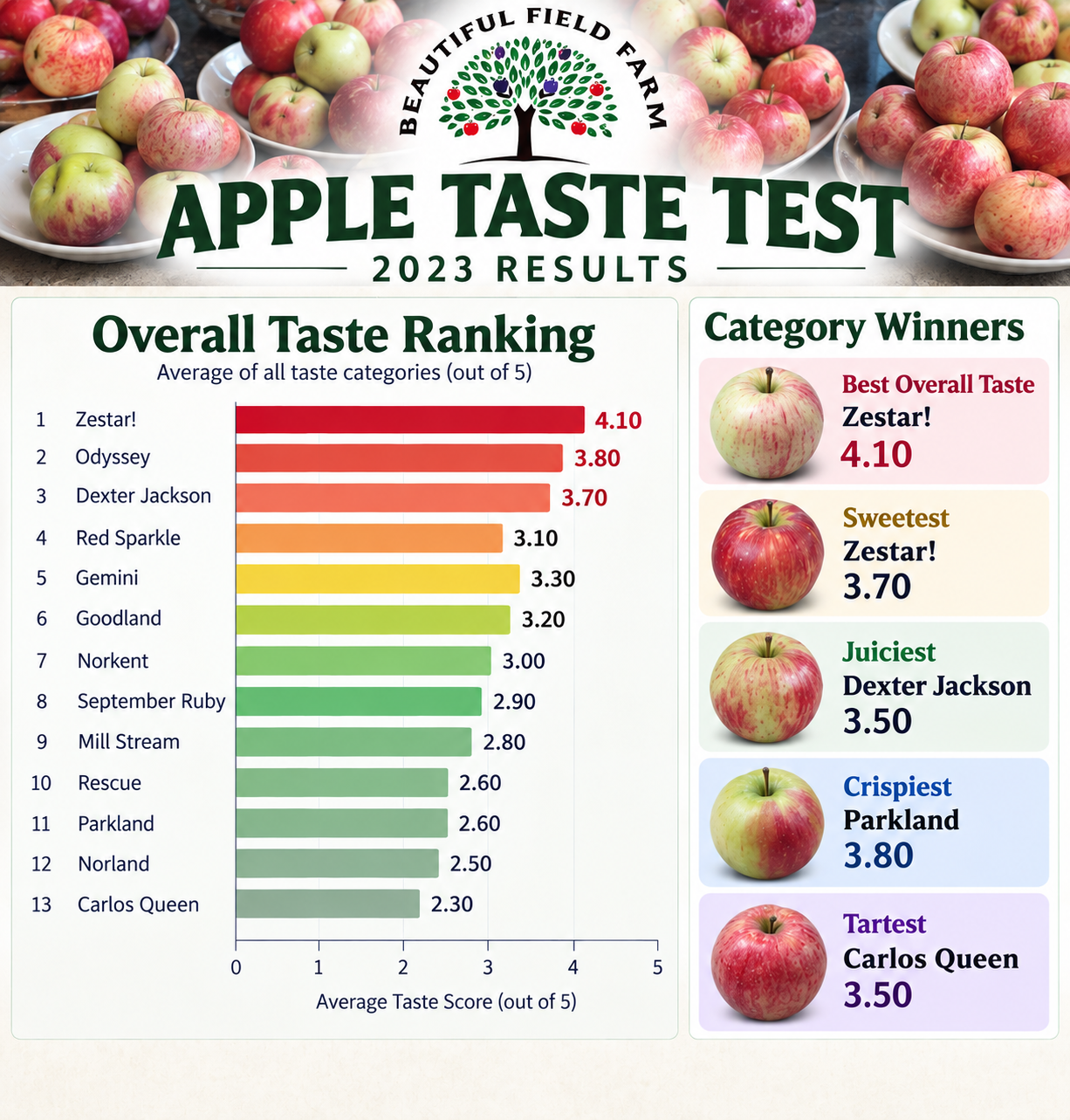
Each Apple Fest, community tasters help us compare the flavour and texture of apples that can grow in Northern Ontario.
These are not laboratory panels. They are honest snapshots of what local people enjoyed that day—and a growing record of Northern cultivars, heritage apples and occasional mystery fruit.
Bring your own harvest
Outside Apple Fest, Beautiful Field Farm schedules community pressing sessions when the harvest allows. Bring rinsed, debris-free fruit, along with enough clean food-safe jars or containers for your cider. Small bruises or windfall marks are generally acceptable, but fruit with rot, mould or substantial insect or animal damage should be removed.
≈ 5Five-gallon pails of apples fill one press cycle.
30–40 LTypical cider yield from a full press cycle.
$20Per press cycle, plus a shared daily cleaning fee.
FreshThe cider is unpasteurized. Refrigerate, freeze or ferment it promptly.
Local apples